






Appalachian Red Redbud
Cercis canadensis 'Appalachian Red'
Mature Height: 15 to 25 ft.
Mature Spread: 15 to 25 ft.
Couldn't load pickup availability
Shipping
| Bloom Color: | Red, dark pink, bright pink |
| Bloom Period: | Early spring |
| Fall Color: | Yellow, orange, copper and gold |
| Foliage Color: | Emerges bright green transitions to dark green in summer |
| Genus & Species: | Cercis canadensis 'Appalachian Red' |
| Growth Rate: | Fast |
| Mature Height: | 15 to 25 ft. |
| Mature Spread: | 15 to 25 ft. |
| Soil Type: | Adaptable, but prefers moist, but well draining soil that is rich in organic matter |
| Sun Exposure: | Full sun; Partial sun; Partial shade; Dappled light |
| Zone: | 4 to 9 |
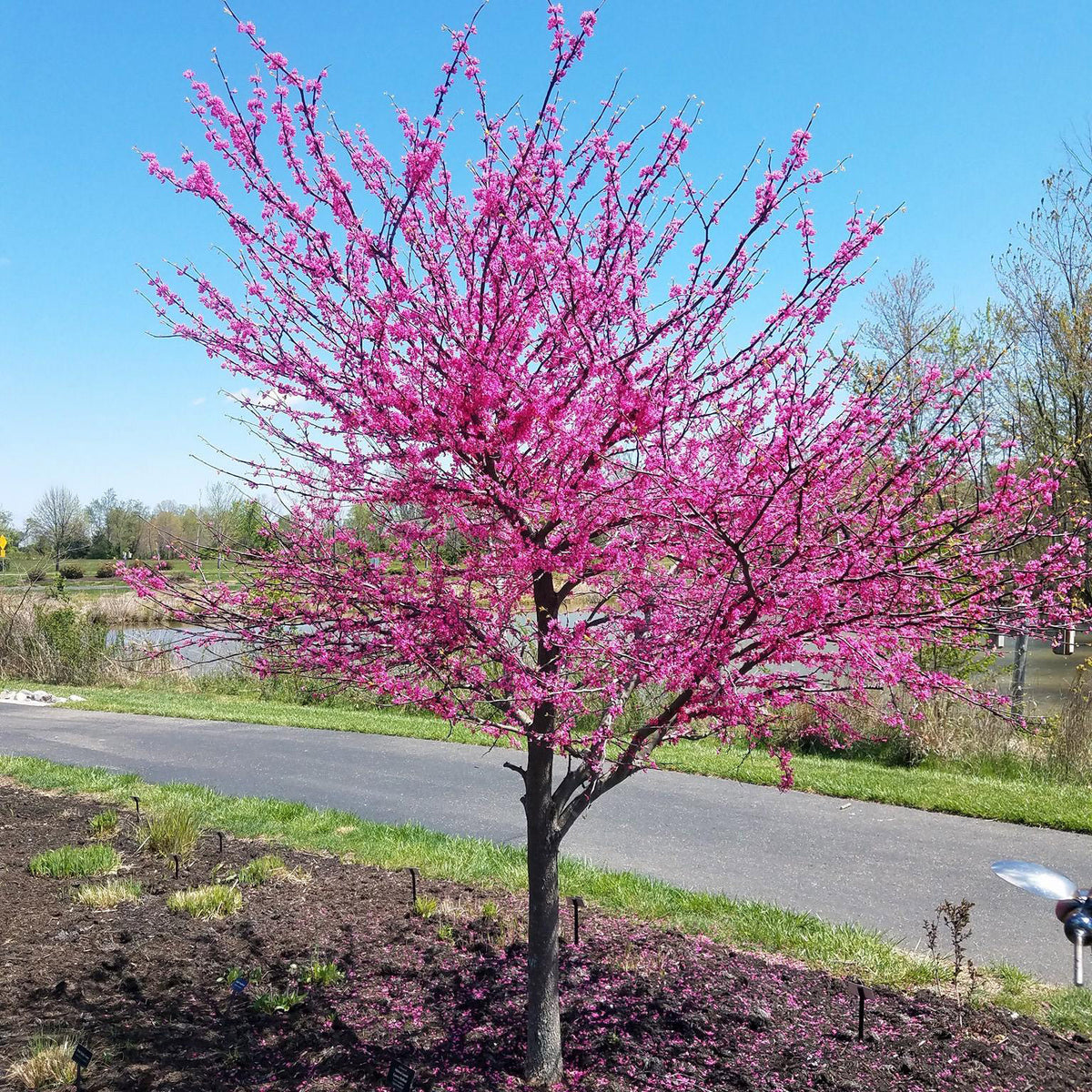
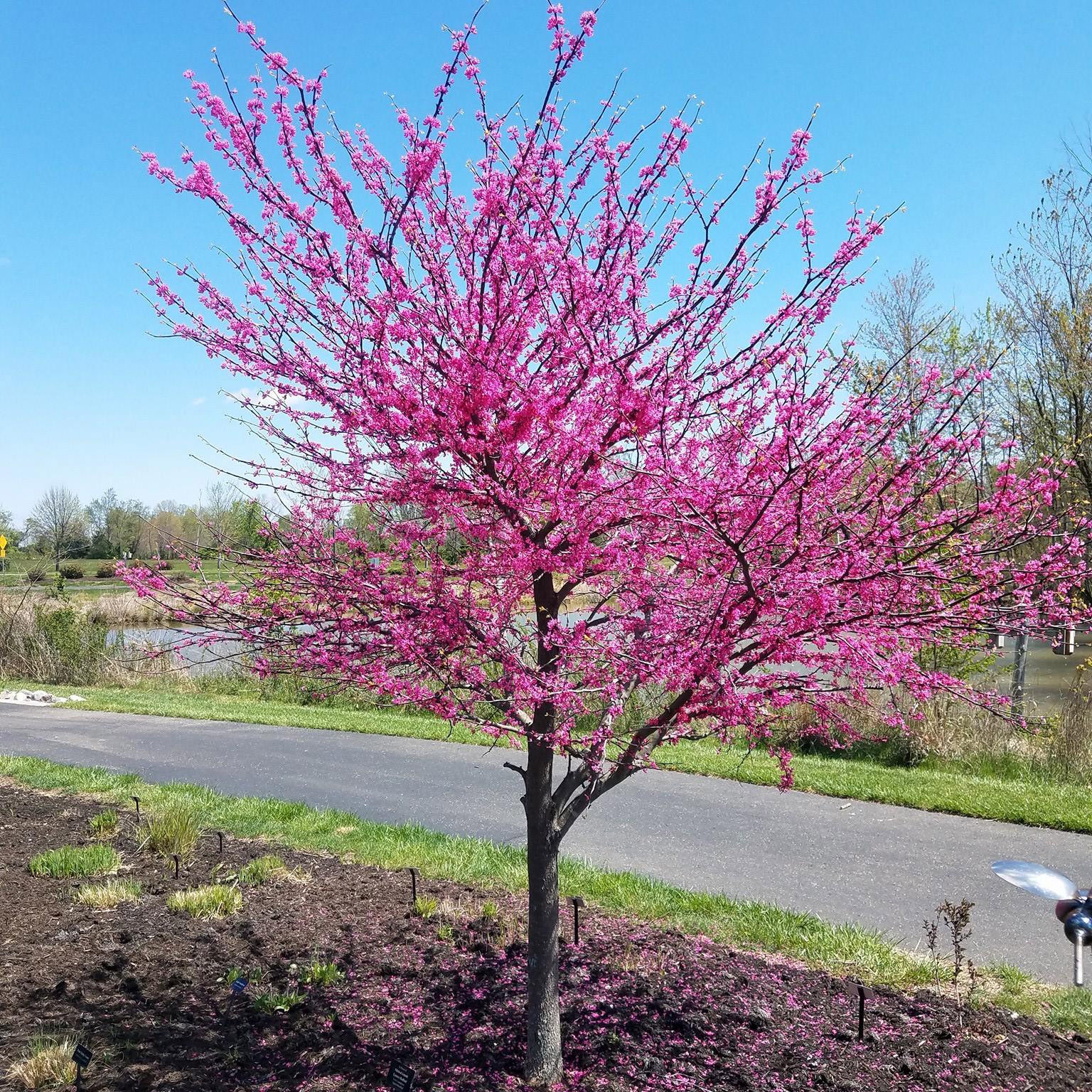
When spring arrives and most gardens still wear their winter grays and browns, the Appalachian Red redbud explodes with color that makes even the most jaded gardener stop and stare. This native cultivar pushes the color dial from polite to exuberant, with deep reddish-purple buds unfurling into nearly neon pink flowers that are so vivid, they practically glow against bare branches.
The Appalachian Red matures to a compact 15 to 25 feet tall with an equal spread, making it manageable for smaller properties while still delivering maximum visual impact. The flowers appear in early spring before the leaves emerge, carpeting the branches and even the trunk itself—redbuds are one of the few trees that bloom directly on their bark, a phenomenon called cauliflory that gives them an otherworldly appearance when in full flower. After the three-week floral display concludes, heart-shaped leaves emerge in a dark blue-green that provides a handsome backdrop through summer before transitioning to butter yellow in autumn.
This cultivar performs admirably in USDA hardiness zones 4 through 9, showing considerably more cold tolerance than many ornamental trees. It prefers well-drained soil rich in organic matter and thrives in full sun to partial shade, though some afternoon shade in hotter climates prevents leaf scorch and helps maintain the best foliage color throughout summer.
The Appalachian Red excels as an understory tree beneath larger shade trees, where its early spring blooms can steal the show before the canopy leafs out. Plant it near patios or windows where you can appreciate the flower display up close, or use it as a specimen tree against white or neutral-colored walls and fences—the contrast makes those hot pink flowers absolutely sing. The compact size makes it suitable for foundation plantings, and it works beautifully in mixed borders alongside spring-flowering bulbs and early perennials.
While this tree makes an excellent solo performer, consider pairing it with white-flowering dogwoods or magnolias for a stunning multi-layered spring display. The architectural form provides interest even in winter, when the branching pattern creates an elegant silhouette against snow or gray skies.
The Appalachian Red represents one of those fortunate discoveries where nature does the breeding work and observant eyes spot the treasure. This cultivar was discovered growing alongside a road in Maryland, a naturally occurring variant of our native Eastern redbud that happened to produce flowers in a far more intense pink-red color than the typical lavender-pink of the species. Someone driving past noticed this roadside standout blooming in a color that demanded attention, and the cultivar was subsequently introduced to cultivation.
The discovery illustrates an important principle in horticulture: valuable cultivars aren't always created through deliberate breeding programs. Sometimes the best selections arise spontaneously in wild populations, waiting for someone to recognize their exceptional qualities. The native range of Cercis canadensis extends throughout eastern North America, and within that vast distribution, genetic variation produces the occasional individual with outstanding ornamental characteristics—like the dramatically intensified flower color of Appalachian Red.
As a native cultivar, the Appalachian Red redbud provides substantial ecological benefits that extend well beyond its ornamental appeal. The early spring flowers deliver a critical nectar source for pollinators emerging from winter dormancy. The flowers also attract various species of butterflies and is a host plant to may of their caterpillars. After flowering concludes, the trees produce flat, bean-like seed pods—legumes, as redbuds belong to the pea family. These pods provide food for songbirds including finches, juncos, nuthatches, cardinals, and rose-breasted grosbeaks through fall and winter. White-tailed deer and squirrels also consume the seeds.
General care for any tree or shrub is easy, but like any living thing will require your attention. Please educate yourself and follow these simple rules.