






Appalachian Red Redbud
Couldn't load pickup availability
Shipping
| Bloom Color: | Red, dark pink, bright pink |
| Bloom Period: | Early spring |
| Fall Color: | Yellow, orange, copper and gold |
| Foliage Color: | Emerges bright green transitions to dark green in summer |
| Genus & Species: | Cercis canadensis 'Appalachian Red' |
| Growth Rate: | Fast |
| Mature Height: | 15 to 25 ft. |
| Mature Spread: | 15 to 25 ft. |
| Soil Type: | Adaptable, but prefers moist, but well draining soil that is rich in organic matter |
| Sun Exposure: | Full sun; Partial sun; Partial shade; Dappled light |
| Zone: | 4 to 9 |
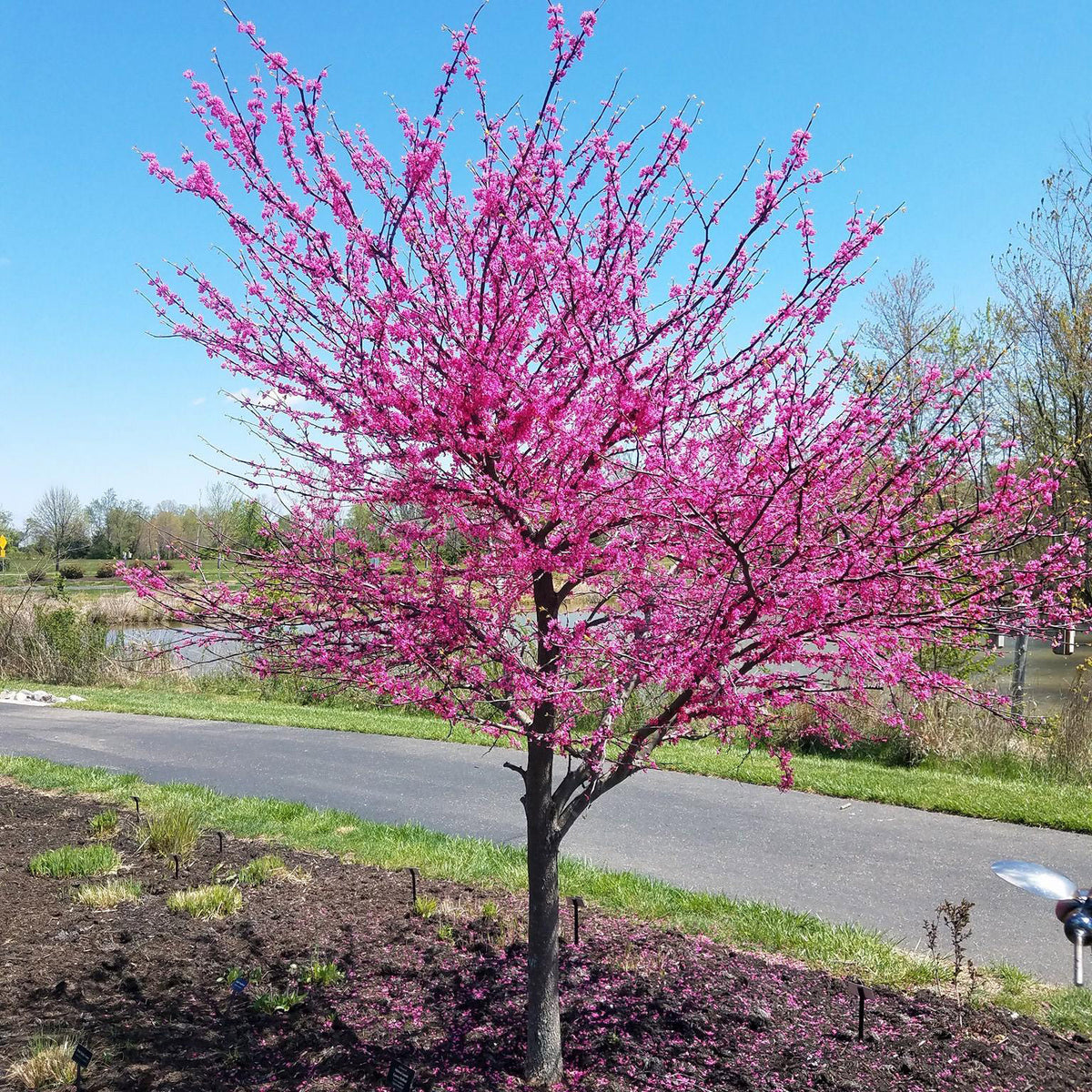
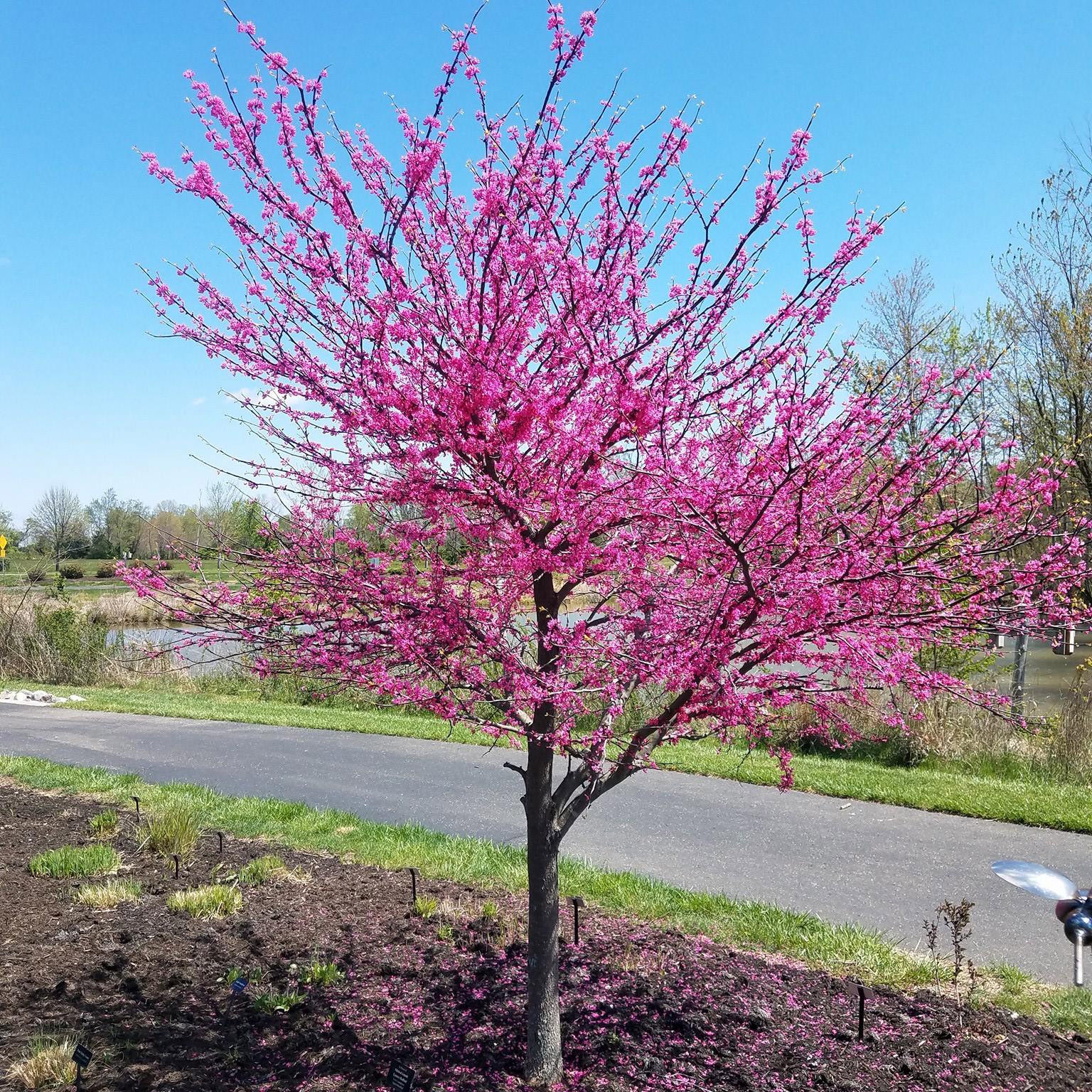
When spring arrives and most gardens still wear their winter grays and browns, the Appalachian Red redbud explodes with color that makes even the most jaded gardener stop and stare. This native cultivar pushes the color dial from polite to exuberant, with deep reddish-purple buds unfurling into nearly neon pink flowers that are so vivid, they practically glow against bare branches.
The Appalachian Red matures to a compact 15 to 25 feet tall with an equal spread, making it manageable for smaller properties while still delivering maximum visual impact. The flowers appear in early spring before the leaves emerge, carpeting the branches and even the trunk itself—redbuds are one of the few trees that bloom directly on their bark, a phenomenon called cauliflory that gives them an otherworldly appearance when in full flower. After the three-week floral display concludes, heart-shaped leaves emerge in a dark blue-green that provides a handsome backdrop through summer before transitioning to butter yellow in autumn.
This cultivar performs admirably in USDA hardiness zones 4 through 9, showing considerably more cold tolerance than many ornamental trees. It prefers well-drained soil rich in organic matter and thrives in full sun to partial shade, though some afternoon shade in hotter climates prevents leaf scorch and helps maintain the best foliage color throughout summer.
The Appalachian Red excels as an understory tree beneath larger shade trees, where its early spring blooms can steal the show before the canopy leafs out. Plant it near patios or windows where you can appreciate the flower display up close, or use it as a specimen tree against white or neutral-colored walls and fences—the contrast makes those hot pink flowers absolutely sing. The compact size makes it suitable for foundation plantings, and it works beautifully in mixed borders alongside spring-flowering bulbs and early perennials.
While this tree makes an excellent solo performer, consider pairing it with white-flowering dogwoods or magnolias for a stunning multi-layered spring display. The architectural form provides interest even in winter, when the branching pattern creates an elegant silhouette against snow or gray skies.
The Appalachian Red represents one of those fortunate discoveries where nature does the breeding work and observant eyes spot the treasure. This cultivar was discovered growing alongside a road in Maryland, a naturally occurring variant of our native Eastern redbud that happened to produce flowers in a far more intense pink-red color than the typical lavender-pink of the species. Someone driving past noticed this roadside standout blooming in a color that demanded attention, and the cultivar was subsequently introduced to cultivation.
The discovery illustrates an important principle in horticulture: valuable cultivars aren't always created through deliberate breeding programs. Sometimes the best selections arise spontaneously in wild populations, waiting for someone to recognize their exceptional qualities. The native range of Cercis canadensis extends throughout eastern North America, and within that vast distribution, genetic variation produces the occasional individual with outstanding ornamental characteristics—like the dramatically intensified flower color of Appalachian Red.
As a native cultivar, the Appalachian Red redbud provides substantial ecological benefits that extend well beyond its ornamental appeal. The early spring flowers deliver a critical nectar source for pollinators emerging from winter dormancy. The flowers also attract various species of butterflies and is a host plant to may of their caterpillars. After flowering concludes, the trees produce flat, bean-like seed pods—legumes, as redbuds belong to the pea family. These pods provide food for songbirds including finches, juncos, nuthatches, cardinals, and rose-breasted grosbeaks through fall and winter. White-tailed deer and squirrels also consume the seeds.
General care for any tree or shrub is easy, but like any living thing will require your attention. Please educate yourself and follow these simple rules.
Redbud Trees
Redbuds are an amazing and varied species of tree. General care and soil requirements are the same, although light and temperature requirements will differ based on cultivar. We sell our redbuds bare-root, we've sold thousands of redbuds this way with few problems, but they will be lightly rooted when you get them. This means your number one priority should be getting the roots established. Do this by planting early in the spring (or fall if you are zone 7a or south) and caring for the tree appropriately with slow release fertilizer and proper water (a moisture meter works wonders).
Most problems with redbuds come from poor site selection. Tougher than a dogwood, a redbud is a hardy tree with few problems when sited properly. It will tolerate full sun or shade can withstand a bit of drought, but will struggle with disease and lack of growth in poor soil.
Site Selection
Redbuds do prefer some shade, afternoon shade is best as morning sun decreases problems with powdery mildew, but most cultivars will grow in full sun without issue. They will not tolerate a site with standing water and prefer well-drained soil rich in organic matter. Soil composition is less important with redbuds than compaction, which happens from heavy equipment, vehicle traffic, mower traffic or even lots of foot traffic. Compacted soil is hard and lacks the natural sponge like structure that redbuds need to grow. A good rule of thumb is that if grass is struggling in an area then redbuds will too. Speaking of grass, grass should be removed in a 2-3 ft. radius around the redbud. Wood mulch should be applied and must be applied to qualify for a refund. Rock leads to extra heating and is as likely to damage your tree as protect it. Finally, redbuds can grow in costal areas, but the salts near the ocean will cause growth issues. They should not be grown south of the Florida pan handle unless your micro-climate specifically sustains existing populations of the tree.
Powdery Mildew
Problems with powdery mildew can occur and if they do we recommend increased airflow and making sure your watering regiment does not wet the leaves. In very wet years or climates this problem can be unavoidable, but try pruning back some of the branches or your redbud to increase airflow. Early spring and after flowering are both suitable times to prune - following directions for proper tree pruning.
Redbud Leaf Roller Caterpillars
Leaf roller caterpillars are small and zebra striped. They will fold, roll, or paste leaves together with silk to create a home. Once again established trees should not be a problem (see below for weeping redbuds), pruning back some of the leaves can improve airflow and access to predators. If you continue to be bothered by them, we suggest stepping back 10 ft. and seeing if they are still a problem. If they are, we prefer the long term solution of creating habitat for predators, birds and tiny parasitic wasps (they don't sting) over the use of pesticides that do more harm than good. Once again eliminating some of the leaf density will give them less high quality real estate, while making them easier for predators to reach. Peeling apart stuck leaves before they receive too much damage is also helpful. We don’t recommend pesticides as these will struggle to reach the leaf rollers caterpillars, simply making them more accessible to predators and using the 10 ft. rule (view the trees from 10 feet away) are the best approaches to dealing with this important food source for birds.
Leaf Cutter Bees
We get a lot of questions about perfectly cut circles and semicircles in redbuds. These are fascinating in their own right, and you may think tiny ancient aliens visited your tree at night. This is the work of the leaf-cutter bee, which is an important native pollinator that uses redbud leaves to make its nests. Once again, living with nature and the 10 ft. rule is the best approach here.
Weeping Redbuds
Weeping redbuds are great trees for small spaces, use them in a home landscape for their unique appearance and beautiful qualities. They must be trained to a certain height, so if purchased below the intended size, stake them and tie them with vinyl tape periodically to help them reach the desired size. At 3-4 in height they make an interesting alternative to shrubs, at 6-7 feet they are gorgeous weeping trees.
Powdery mildew and redbud leaf rollers can be a bigger problem for weeping redbuds due to the leaves layering on top of one another that create a lack of airflow and deny access to predators. We recommend periodic pruning of your weeping redbud if you experience either of these issues. Think of it as a haircut and take your time pruning only a small amount and smaller branches if possible. Spring and summer after flowering are both good times to prune.