

Weeping Willow Tree
Salix babylonica
Mature Height: 30 to 40 ft.
Mature Spread: 30 to 40 ft.
Couldn't load pickup availability
Shipping
| Bloom Color: | Yellow |
| Bloom Period: | Spring |
| Fall Color: | Yellow |
| Foliage Color: | Green |
| Genus & Species: | Salix babylonica |
| Growth Rate: | Fast |
| Mature Height: | 30 to 40 ft. |
| Mature Spread: | 30 to 40 ft. |
| Soil Type: | Adaptable to a wide range of soil and moisture conditions |
| Sun Exposure: | Full sun, partial sun |
| Zone: | 6 to 8 |
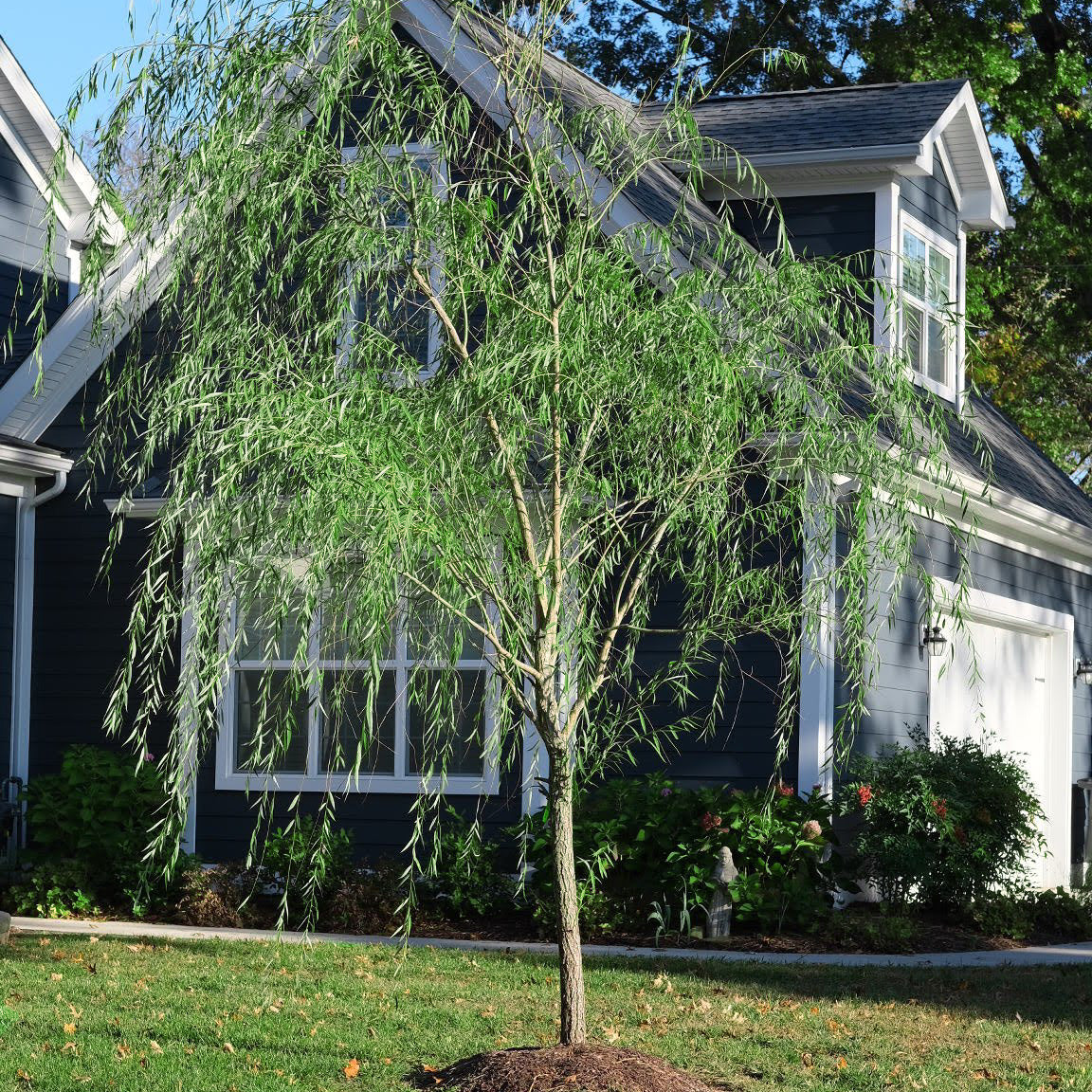
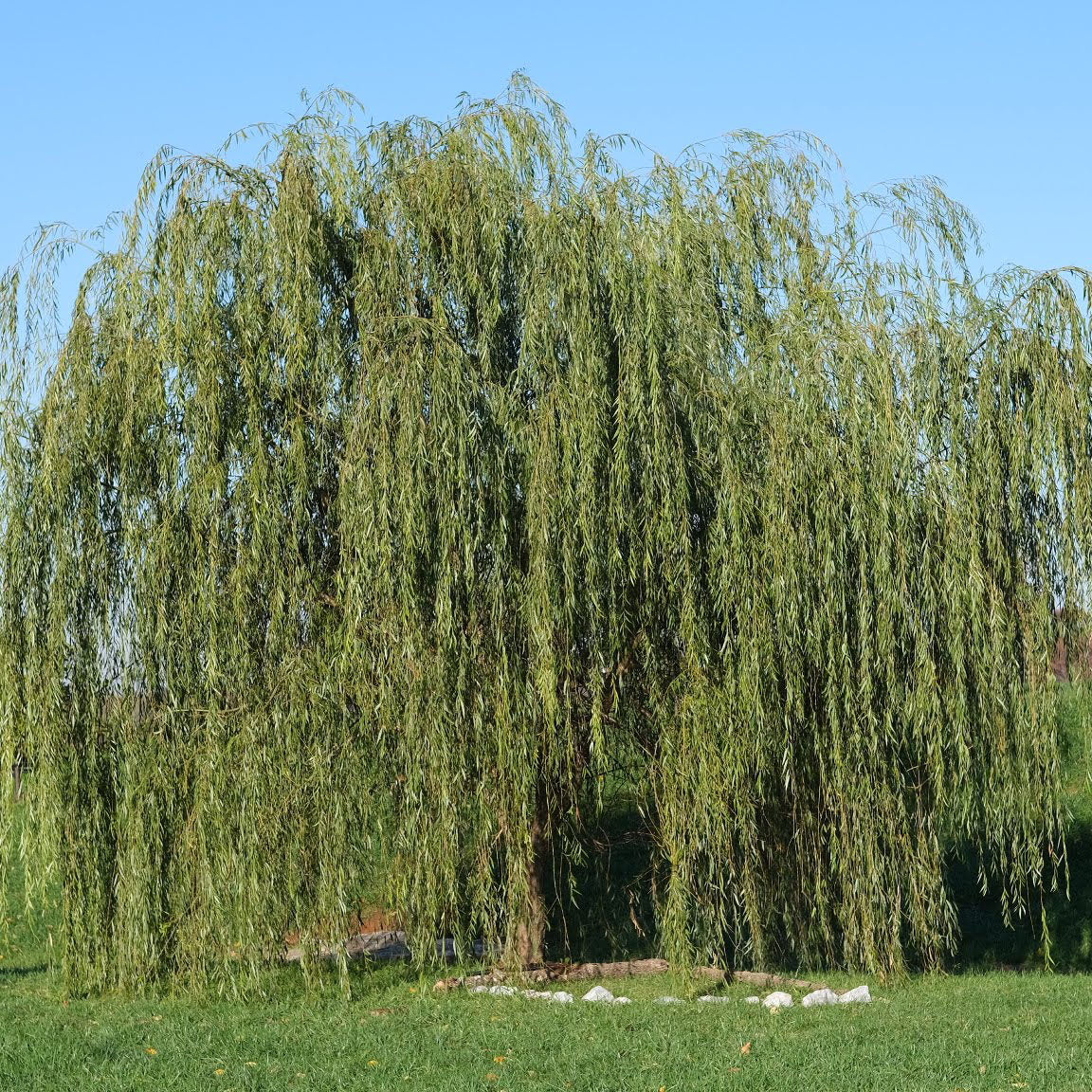
Few trees command a landscape like the weeping willow. This graceful giant sweeps its pendulous branches earthward in dramatic curtains of narrow, light green foliage, creating an instantly recognizable silhouette that transforms any waterside setting into a scene of contemplative beauty. Growing 30 to 50 feet tall with an equal or greater spread, the tree develops a broad, rounded crown atop a stout trunk covered in grayish-black furrowed bark. Slender lance-shaped leaves emerge light green with grayish undersides, arranged spirally on long yellowish-brown branches that cascade toward the ground. The tree grows with remarkable speed—adding up to 10 feet per year when young—though this vigor trades longevity for drama, with most specimens living 40 to 75 years. In early spring, inconspicuous silvery-green catkins appear before the foliage fully emerges, and in fall the leaves turn soft gold-yellow before dropping.
The weeping willow thrives where other trees struggle—in moist soils, along stream banks, at pond edges, even in areas with standing water. It adapts to clay, alkaline, and acidic soils, tolerates wet feet beautifully, and provides rapid screening and erosion control. Plant it where you have space to let it spread and where its romantic form can reflect in water. The tree demands honesty about its drawbacks: shallow roots seek out water and sewer lines, weak wood breaks easily in storms, and the tree litters constantly with dropped leaves and twigs. It also attracts various diseases and insect pests. This makes weeping willow best suited for parks, large estates, and commercial landscapes rather than typical residential yards—but where properly sited with room to grow and regular maintenance, few trees create more drama or beauty.
The species carries one of botany's great naming mistakes. Carl Linnaeus christened it Salix babylonica in 1736, believing it was the willow from Psalm 137 along the rivers of Babylon—those biblical trees were actually poplars. The weeping willow actually originates from northern China, where it was cultivated for millennia before being traded westward along the ancient Silk Road, eventually reaching England from Syria in 1730. Here's where this tree truly earns its keep: native willows rank as keystone species in ecosystems, and even this Asian introduction provides remarkable wildlife value. The genus Salix hosts 328 species of Lepidoptera larvae, including Viceroy, Mourning Cloak, and Red-spotted Purple butterflies, providing critical food for songbird nestlings. Early spring catkins offer essential nutrition when pollinators emerge from hibernation, supporting at least eleven specialist bee species in the Andrena genus that depend exclusively on willows for survival. The tree also shelters and feeds beavers, rabbits, deer, and numerous bird species. Plant a weeping willow where you have the space, accept its quirks, and you'll create a landmark that feeds both the eye and the ecosystem.
[1] University of Florida IFAS Extension. "Salix babylonica: Weeping Willow." ENH-734/ST576.
[2] NC State Extension. "Salix babylonica." North Carolina Extension Gardener Plant Toolbox.
[3] Ecological Landscape Alliance. "Superfoods in the Insect Garden."
General care for any tree or shrub is easy, but like any living thing will require your attention. Please educate yourself and follow these simple rules.