
Hearts of Gold Redbud
Cercis canadensis 'Hearts of Gold'
Mature Height: 15 to 20 ft.
Mature Spread: 10 to 15 ft.
Couldn't load pickup availability
Shipping
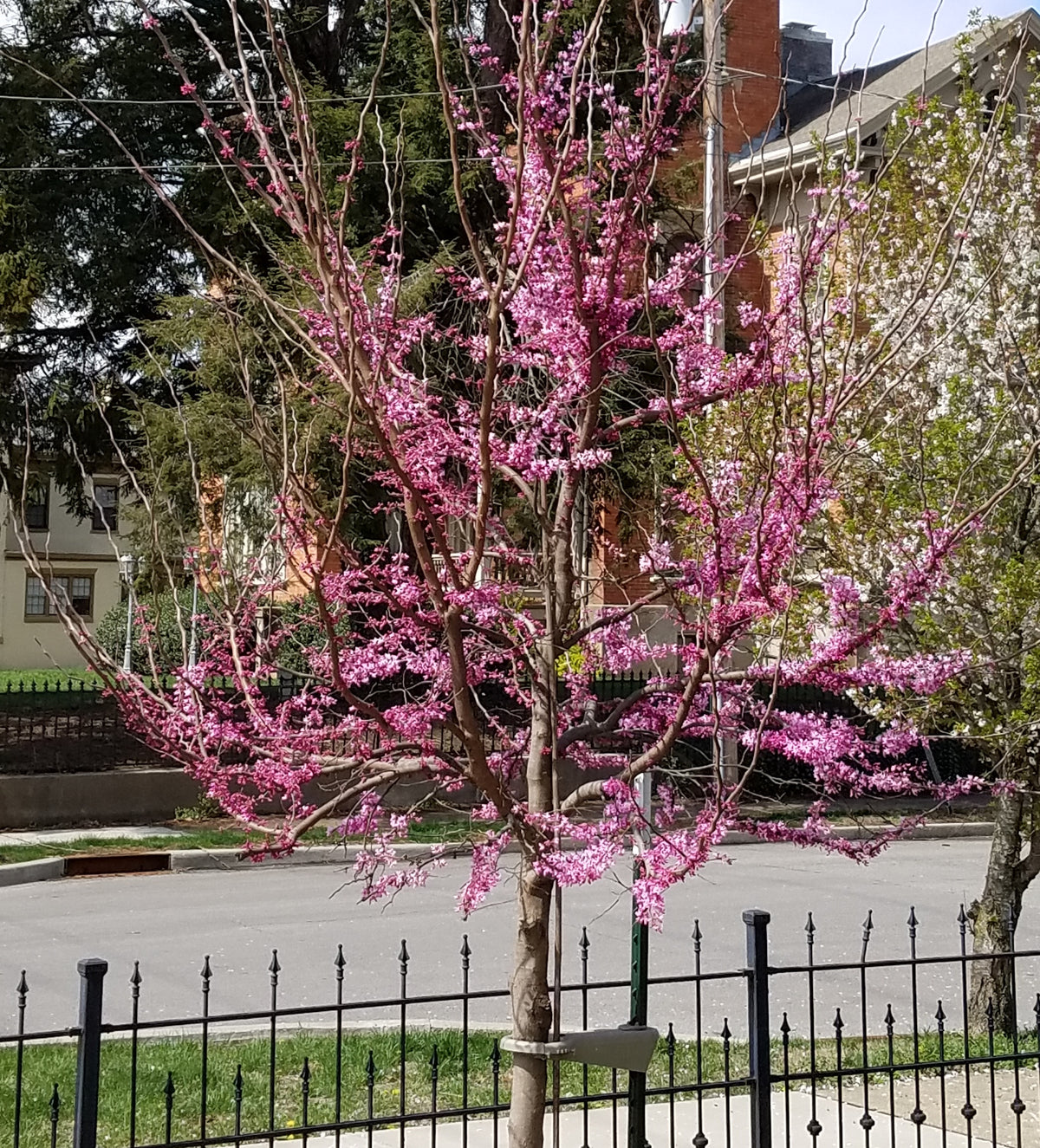
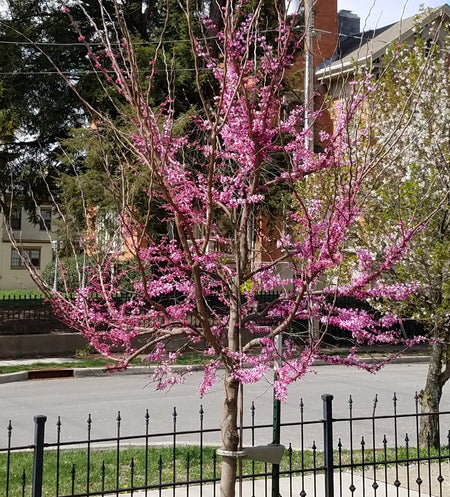
| Bloom Color: | Purple/pink |
| Bloom Period: | Early spring |
| Fall Color: | Yellow |
| Foliage Color: | New growth emerges gold/bright yellow and transitions to green |
| Genus & Species: | Cercis canadensis 'Hearts of Gold' |
| Growth Rate: | Fast |
| Mature Height: | 15 to 20 ft. |
| Mature Spread: | 10 to 15 ft. |
| Soil Type: | Adaptable to many soil types, including wet soil, but prefers moist, but well draining soil that is rich in organic matter |
| Sun Exposure: | Full sun, partial sun, partial shade |
| Zone: | 5 to 9 |
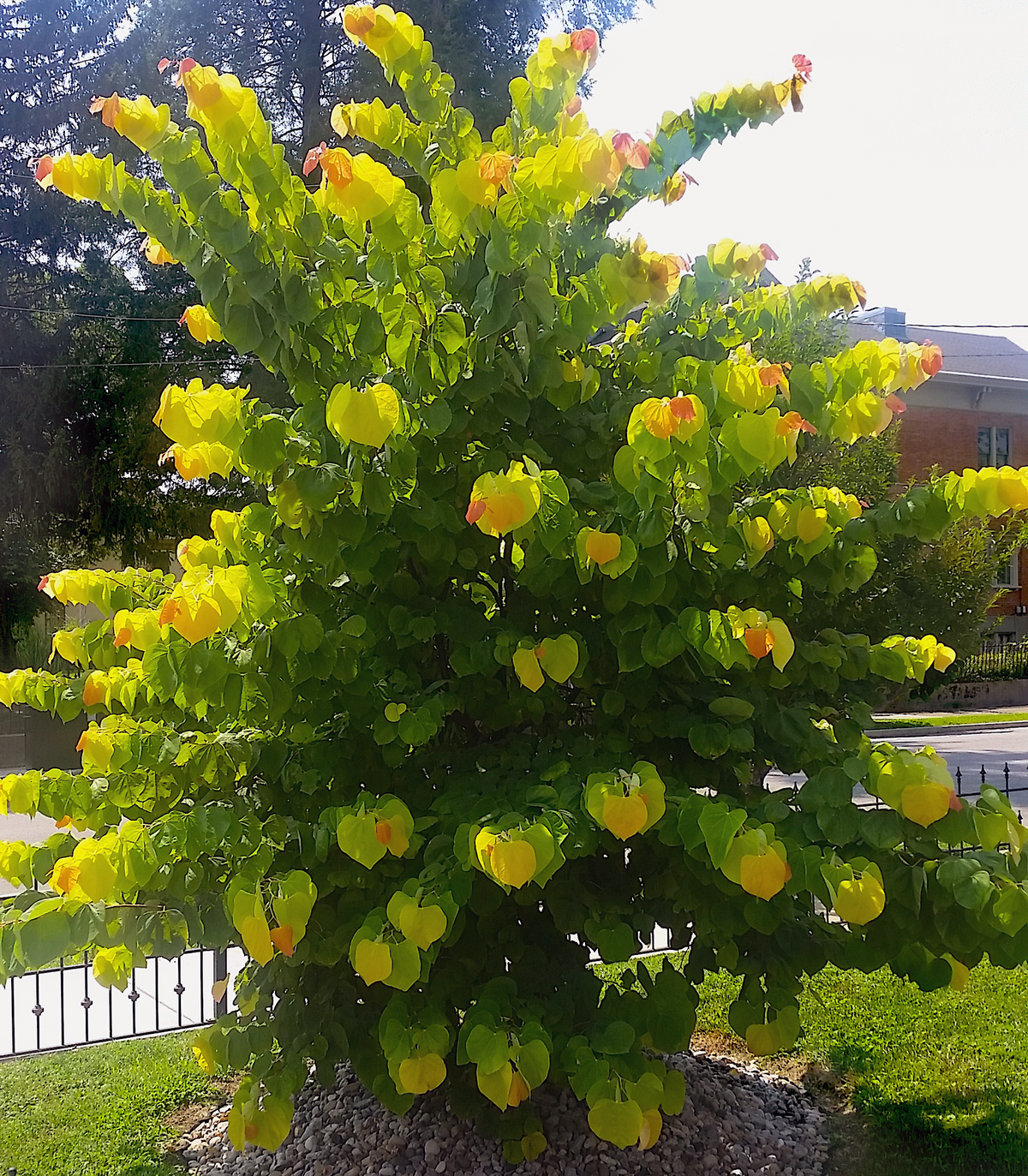
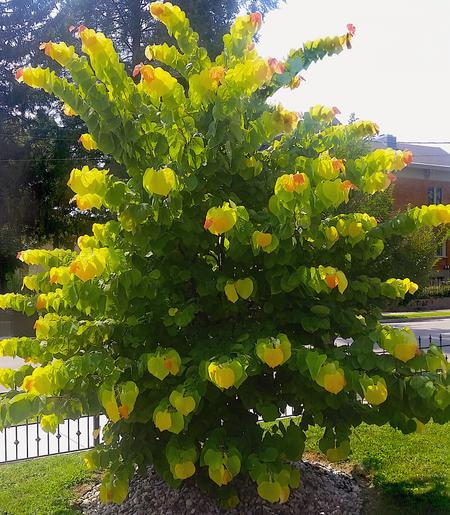
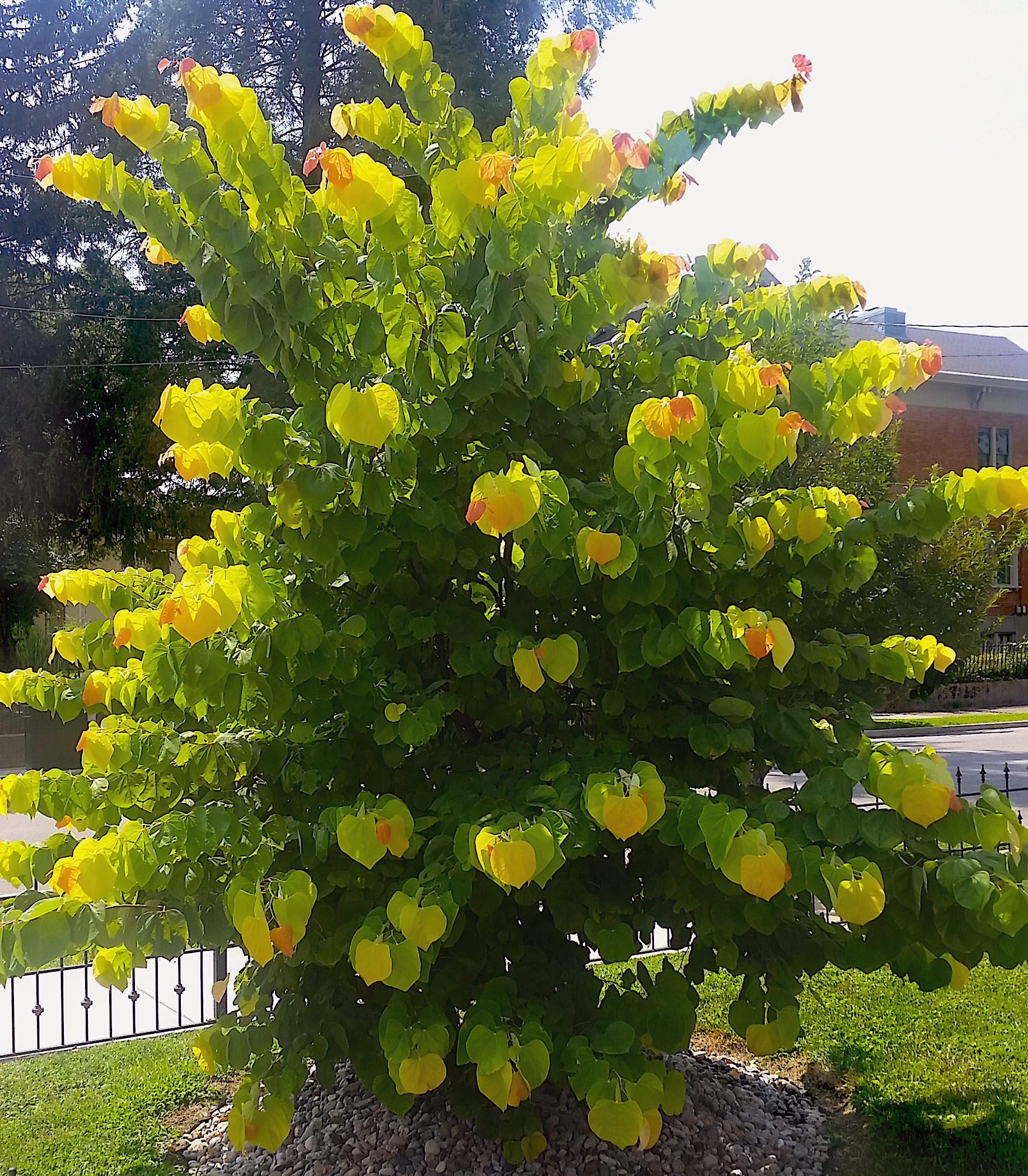
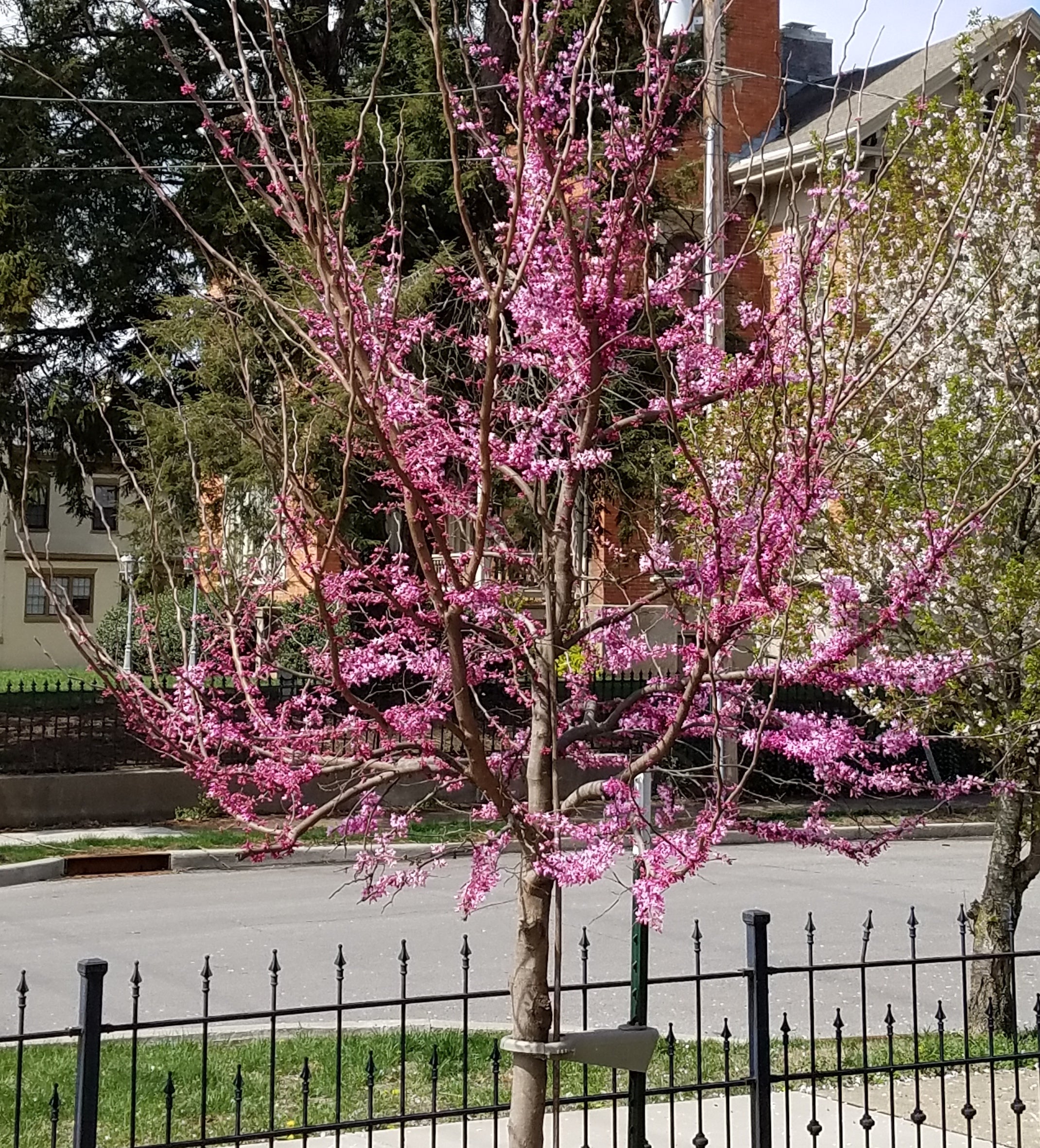
Hearts of Gold was one of the first designer redbuds that blew us away with its color and beauty. These photos were taken when we first got into the nursery business back in 2017. We were walking down Main Street in New Albany, Indiana when we spotted this tree. The owner was sitting on his porch. He saw us stop and told us it was a Hearts of Gold redbud that he had ordered it specifically for the outstanding color and shape. We chatted for a good while and asked to take a few photos (we weren't the best photographers in 2017!). Hearts of Gold have been hard to find, but seven years later we are able to get a handful each year!
What sets Hearts of Gold apart from Rising Sun, is the more shrublike appearance and how the leaves cascade down each branch creating an accordion like effect on each branch. They are an excellent specimen tree and can withstand the urban heat island of larger cities. Color is best with excellent care, good soil, and fertilization. If you are searching for something that will stop a passerby, this one stopped us!
General care for any tree or shrub is easy, but like any living thing will require your attention. Please educate yourself and follow these simple rules.
Hearts of Gold Redbud
Soil quality and how to plant the Ace of Hearts
The Flame Thrower, like most redbud trees prefers consistently moist soil that is rich in organic matter, but can do well in a wide range of soils. Soil compaction will restrict growth and should be addressed by digging as large a hole as possible. We recommend a minimum of 3x3 ft. and digging at least 18 inches deep to break up the soil. Remove the grass, but retain as much of the original soil from the grass clumps as possible. A higher quality soil can be supplemented, but use no more than a 30% new to 70% original soil ratio. Too much new soil can cause water to pool in the hole, which will drown and kill the plant. With redbuds, mulching is extremely important (especially in the early years) as it suppresses grass and weeds, retains moisture, improves soil quality and reduces the chances of compaction from foot or mower traffic. For more specific details on how to plant see our guide.
When to fertilize the Ace of Hearts
The Flame Thrower depends on new growth for it to maintain it's spectacular appearance, so fertilizer is recommended for optimal growth. A soil test is recommend for accurate fertilization, but a general NPK + micronutrients slow release fertilizer will cover the basis if a test is not performed. We recommend a 10-11 month slow release fertilizer be applied each year as a top dress in the mulch around the growing area. Apply this fertilizer prior to spring, so that the tree has access to nutrients in the spring and fall growing periods.
How and when to prune the Ace of Hearts
Pruning can be a challenge for new gardeners, so unless you are experienced, we recommend limiting pruning to a few branches each season. Pruning can be done during the winter months, but will rob you of the newest blooms. Pruning can also be done in late spring, after the blooms fade. Try to focus on branches that cross into the tree or create a steep V as these can create rubs, restrain growth on the central leader, and lead to breakage. Prune branches that are lower to the the ground to allow for space under the tree for mowing and and a more tree-like appearance. Most redbuds will grow shoots around the base of the tree, trim these back as low to the ground as possible each season. I've seen shoots grow almost to the size of a small tree within a few months, so get them as early as you can. When pruning take care to prune branches when they are as small as possible and take no more than 1/3 of the branches from a tree in one season.