
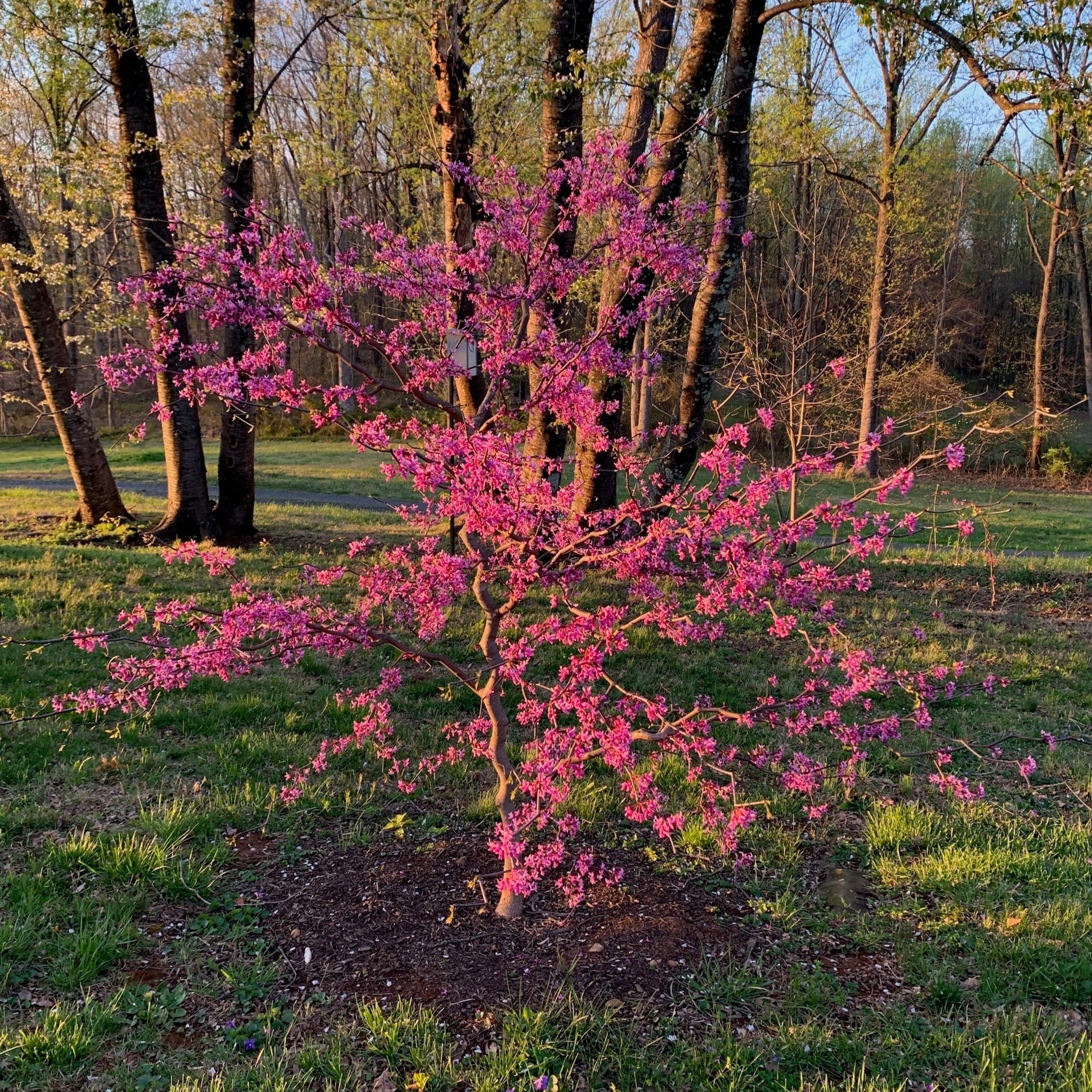
Zig Zag Redbud
Cercis canadensis 'Seirb' PP32985
Mature Height: 20 ft.
Mature Spread: 25 ft.
Couldn't load pickup availability
Shipping
| Bloom Color: | Lavender purple/pink |
| Bloom Period: | Early spring |
| Fall Color: | Yellow, with shades of green and orange |
| Foliage Color: | New growth is cooper; transitions quickly to green |
| Genus & Species: | Cercis canadensis 'Seirb' PP32985 |
| Growth Rate: | Moderate |
| Mature Height: | 20 ft. |
| Mature Spread: | 25 ft. |
| Soil Type: | Adaptable to many soil types, including wet soil, but prefers moist, but well draining soil that is rich in organic matter |
| Sun Exposure: | Full sun, partial sun, partial shade |
| Zone: | 4 to 8 |
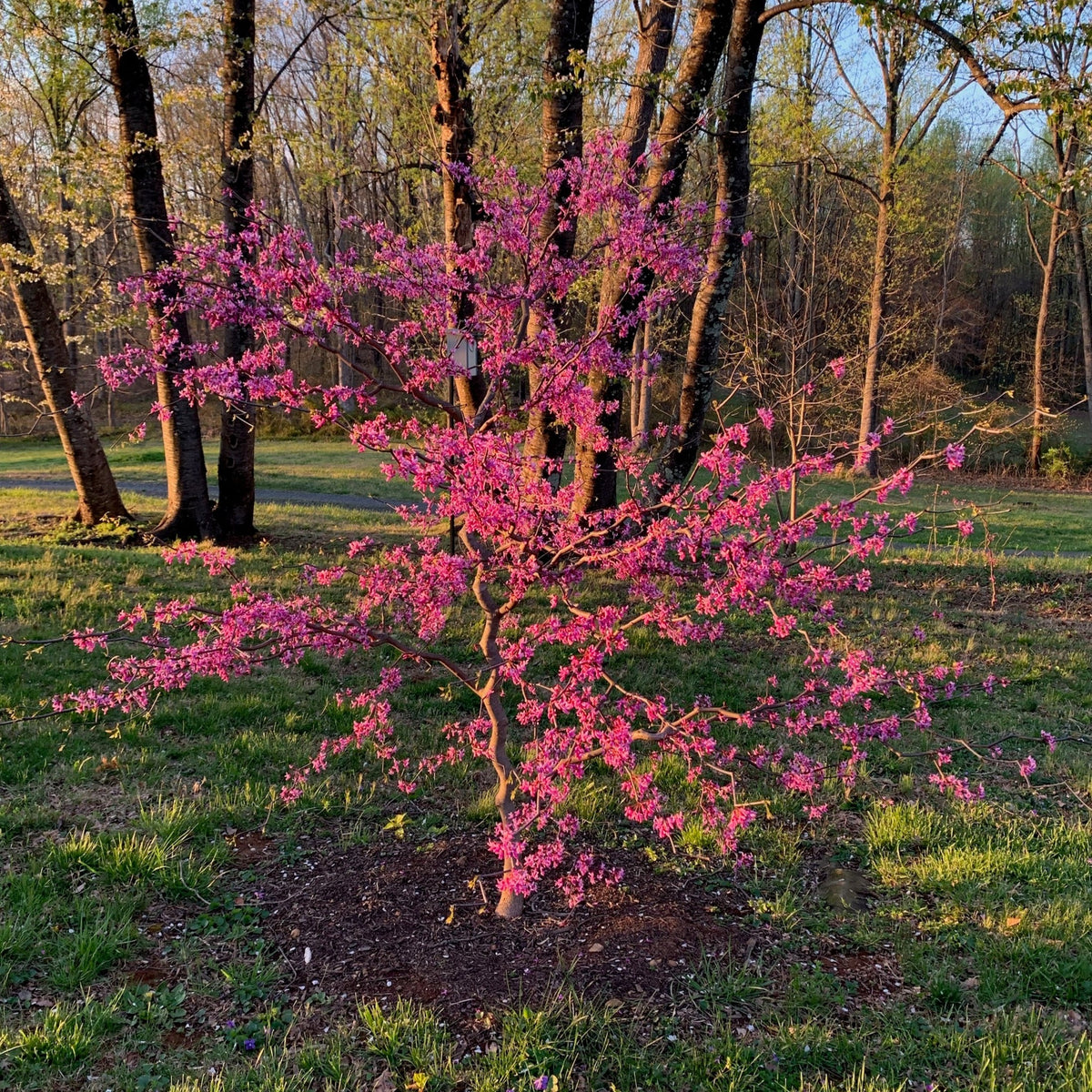
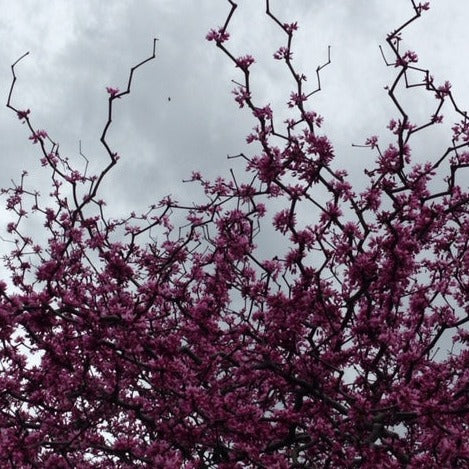
This delightful redbud is guaranteed to add a little bit of whimsy to your garden. Zig Zag™ is named for the geometrically distinct zig zag pattern of every single branch. All red buds feature this zig zag growth pattern as new stems alternate growing in oppositie directions, but Zig Zag™ takes this appearance and amplifies it to eleven. A relatively small specimen at 20' tall by 25' wide, Zig Zag™ makes a perfect showcase piece for the garden, where it serves like a living art installation. In the spring, the zig zag branches are accentuated by lavender pink blooms and it's extreme shape gives it a dramatic silhouette. As spring wears on and summer approaches, heart shaped green leaves emerge and begin to hide some of the dramatic shape, but new growth quickly emerges bringing back the jagged lines of Zig Zag™.
Zig Zag™ is a native cultivar, and pairs well with other native perennials when the goal is a native North American garden. In our experience, we find that Zig Zag™ does well in both full sun and partial sun. You can find more information about how to plant and fertilize on the tab labeled "Care" below.
Images Courtesy of Plants Nouveau
General care for any tree or shrub is easy, but like any living thing will require your attention. Please educate yourself and follow these simple rules.
Zig Zag Redbud
Soil quality and how to plant the Zig Zag Redbud
The Zig Zag, like most redbud trees prefers consistently moist soil that is rich in organic matter, but can do well in a wide range of soils. Soil compaction will restrict growth and should be addressed by digging as large a hole as possible. We recommend a minimum of 3x3 ft. and digging at least 18 inches deep to break up the soil. Remove the grass, but retain as much of the original soil from the grass clumps as possible. A higher quality soil can be supplemented, but use no more than a 30% new to 70% original soil ratio. Too much new soil can cause water to pool in the hole, which will drown and kill the plant. With redbuds, mulching is extremely important (especially in the early years) as it suppresses grass and weeds, retains moisture, improves soil quality and reduces the chances of compaction from foot or mower traffic. For more specific details on how to plant see our guide.
When to fertilize the Zig Zag Redbud
The Zig Zag depends on new growth for it to maintain it's spectacular appearance, so fertilizer is recommended for optimal growth. A soil test is recommend for accurate fertilization, but a general NPK + micronutrients slow release fertilizer will cover the basis if a test is not performed. We recommend a 10-11 month slow release fertilizer be applied each year as a top dress in the mulch around the growing area. Apply this fertilizer prior to spring, so that the tree has access to nutrients in the spring and fall growing periods.
How and when to prune the Zig Zag Redbud
Pruning can be a challenge for new gardeners, so unless you are experienced, we recommend limiting pruning to a few branches each season. Pruning can be done during the winter months, but will rob you of the newest blooms. Pruning can also be done in late spring, after the blooms fade. Try to focus on branches that cross into the tree or create a steep V as these can create rubs, restrain growth on the central leader, and lead to breakage. Prune branches that are lower to the the ground to allow for space under the tree for mowing and and a more tree-like appearance. Most redbuds will grow shoots around the base of the tree, trim these back as low to the ground as possible each season. I've seen shoots grow almost to the size of a small tree within a few months, so get them as early as you can. When pruning take care to prune branches when they are as small as possible and take no more than 1/3 of the branches from a tree in one season.